Satellite-connected agricultural IoT system
A network of field nodes that measures soil, environment and leaf conditions, and uploads the data to the cloud over satellite or 2G — without depending on mobile coverage. Solar power, an IP66 enclosure and years of maintenance-free service.
The problem: deciding blind
Crops that can’t be checked in person every day —orchards, vineyards, remote fields or scattered plots— lose money on decisions made without data.
No data, guesswork irrigation
Without real soil moisture, temperature and condition data, growers over- or under-water: wasted water and lost yield.
Reacting too late
A frost or a pest can be seen coming with data. Without it, the damage is only discovered once it’s already done.
Where there’s no coverage, classic IoT doesn’t work
In remote plots mobile signal is intermittent or non-existent: solutions based only on 4G or WiFi simply don’t reach.
How it works
A network of field devices with a master–slave architecture, built to run for years, maintenance-free, in harsh conditions.
Slave nodes across the field
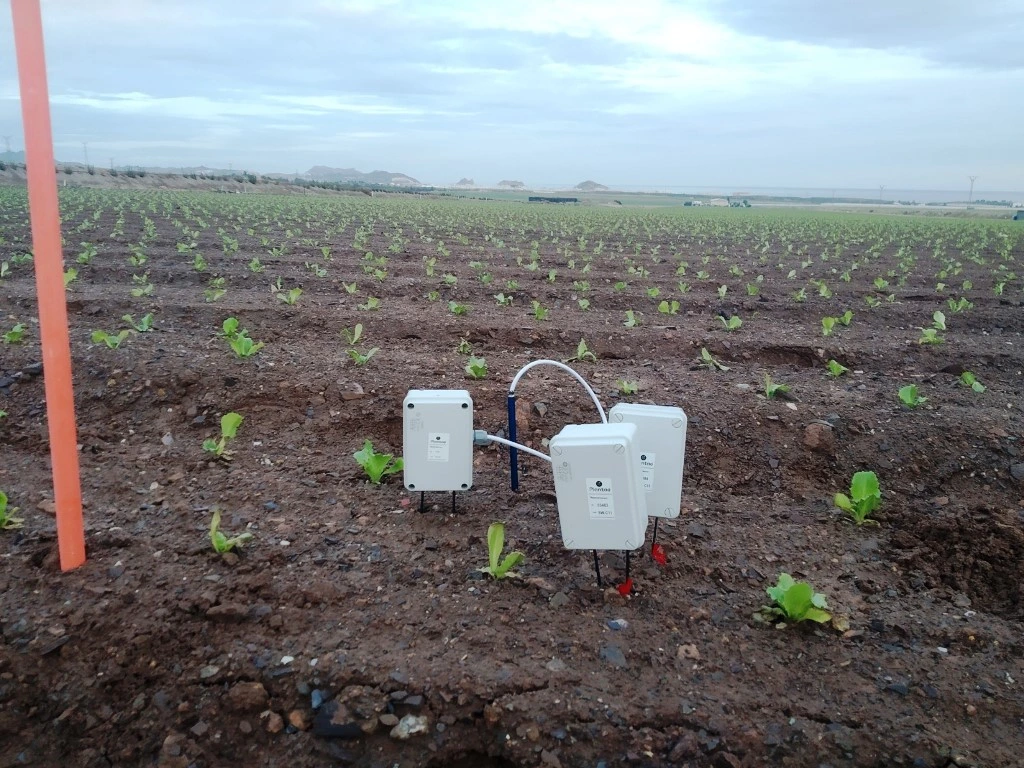
Small stations with multiple sensors —soil, environment and leaf—. Each slave measures its zone and sends the readings to the master over an internal field network.
A master node that aggregates and uploads
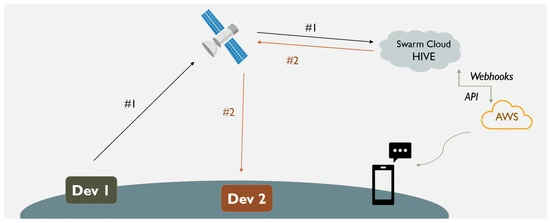
Gathers the data from every slave, packages the readings to optimize each message’s size, and uploads them to the cloud.
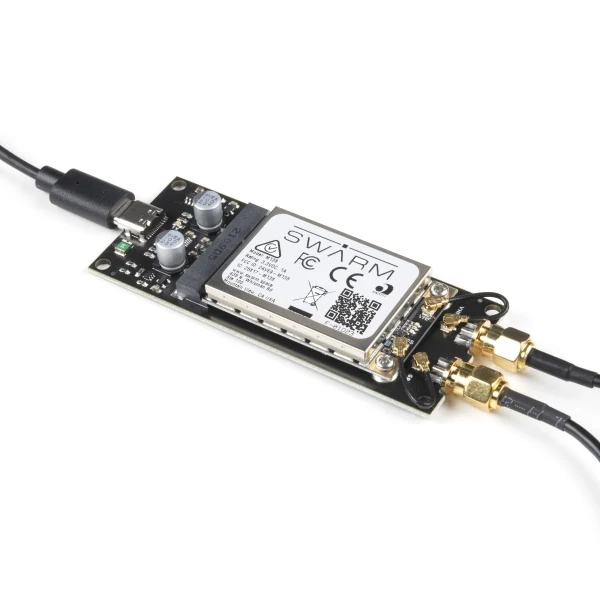
Dual connectivity: satellite and 2G
In the field, 2G often reaches where 4G doesn’t. Combined with the satellite link, the system always has an uplink and picks the most efficient one at any moment.
Autonomous and built for the outdoors
Battery and solar panel on every device: charges during the day, runs at night, no mains power and no one needs to go out and swap batteries. IP66 enclosure to stay installed year-round.
What we built
RobotUNO designed and implemented the entire electronics layer of the system. On top of it, the client built their own user application, with alerts, dashboard and agronomic logic.
Custom PCBs
End-to-end electronics design for both the master node and the slave nodes.
Power management
Multi-voltage power supply with solar charging, sized to run for years without anyone needing to swap a battery.
Own firmware
Versioned firmware for master and slaves: sensor reading, internal field network, data packaging and cloud upload.
Three iterations with the client
The design evolved through three successive iterations on top of the original base, with the client validating each round.
What it enables
The electronics layer powers decisions that used to be made by intuition.
Precision irrigation
Decide when and how much to water based on real soil moisture, not intuition.
Early frost warning
React before the temperature drops below the critical point.
Pest and disease prevention
Correlate temperature, humidity and leaf conditions to anticipate outbreaks.
Seasonal planning
Real climate history for the plot to decide planting, harvest and rotation.
Technology
The whole field stack, from sensor to cloud.
- Master–slave architecture
- Multi-node field network
- Satellite connectivity
- 2G connectivity
- Soil sensors
- Environmental sensors
- Leaf sensors
- Battery + solar panel
- Multi-voltage power management
- IP66 enclosure
- Custom PCB (master and slaves)
- Own versioned firmware
- Data packaging and cloud upload
Gallery
Custom electronics by RobotUNO
Hardware built for the field: connectivity where there’s no coverage, solar autonomy and resistance to the elements. Have a similar project?